News and analysis
Heavy reports and the operational database: separate the workload
PlanetScale and Percona describe different routes for analytics. Check freshness, recovery and impact on day-to-day operations before choosing.
The owner needs a report before the working day begins, but employees should not have to wait for an order to open while it runs. When long reads compete with operational work, the decision goes beyond dashboard presentation. Two publications dated 6 October describe different ways to move analytical reads and make acceptable data delay a central requirement.
A replica keeps a familiar query interface
PlanetScale introduced dedicated read replicas for Postgres, with independently chosen size and a separate endpoint. Replication is asynchronous. Report users therefore need an agreed tolerance for lag, while the application needs to distinguish the purposes of its connections.
This may suit a team whose reports already use operational SQL and whose main requirement is to separate expensive reads. A replica does not make every report instant. Measure the actual queries and test behaviour when replication falls behind. Decide whether a report must immediately show a record the user has just changed.
An analytical copy changes the storage path
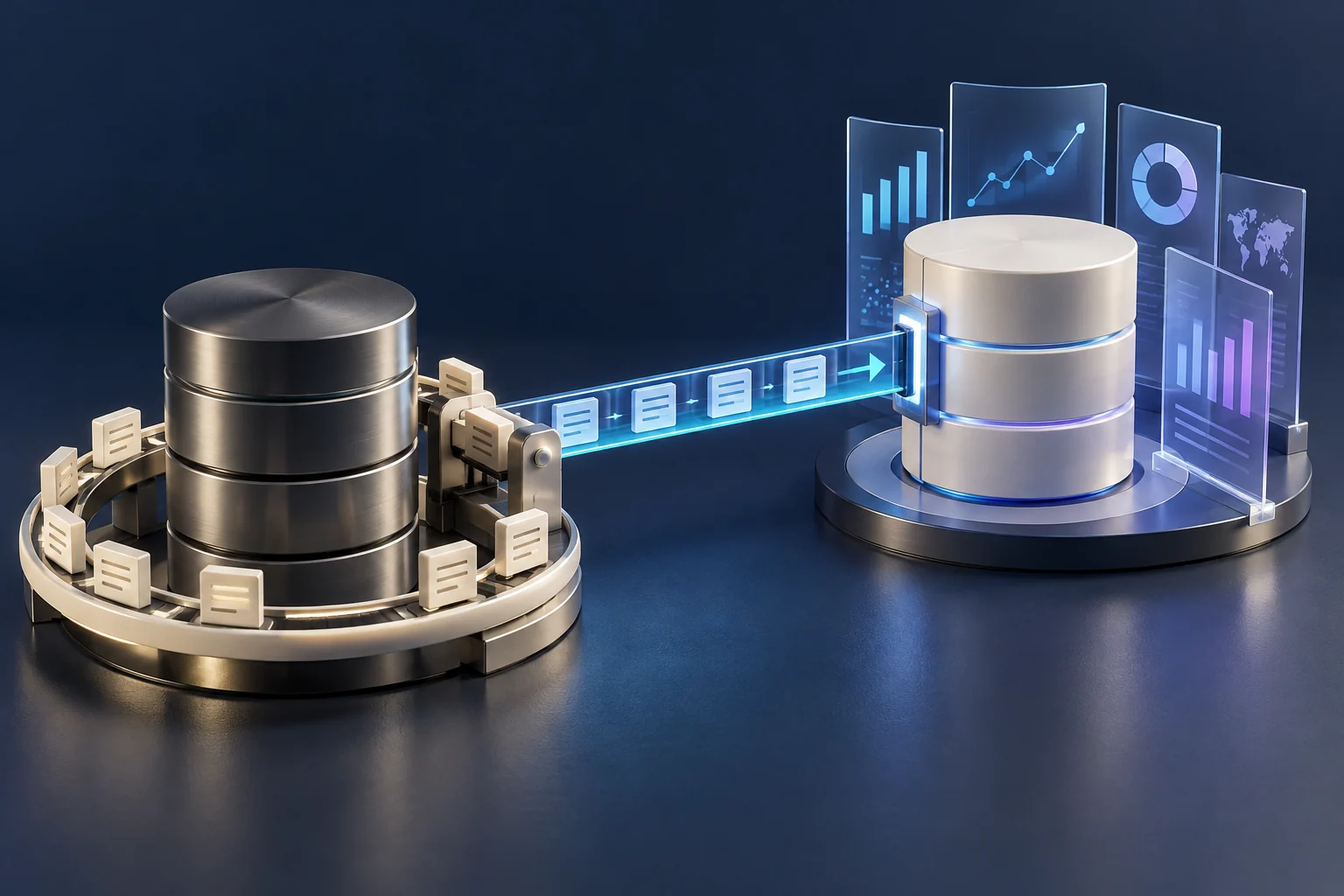
Percona described DBTrail: mydumper creates an initial MySQL copy in Parquet, changes arrive through the binary log, and DuckDB runs queries against the resulting data. It does not require a plugin or trigger inside the source MySQL instance. Published performance results belong to the stated test setup, not an arbitrary customer database.
This introduces a separate data preparation path. It is worth assessing when analytical queries need a different reading arrangement. The new environment also needs an owner for synchronization, missing updates and rebuilding the copy. Avoiding a source-database plugin does not eliminate operational work.
Choose around the decision the report supports
The comparison suggests a conditional conclusion: both approaches can separate analytical reads, but their operational boundaries differ. Before selecting either, identify what decision someone makes from the report. A monthly summary and an availability check immediately before an order handover need different freshness guarantees.
Take one demanding query and measure an operational action while the report runs. Repeat the exercise with the selected separate environment. Record duration, result completeness and data age. Include a synchronization outage and recovery: the report should expose a meaningful status rather than silently present an old copy as current.
The report owner should know where to inspect lag and who handles a problem. Sometimes a query change or a different schedule is sufficient before another service is introduced. That choice also needs supporting measurements.
Our guide to moving from spreadsheets to systems helps establish data ownership. The Mailwizz analytics case describes a historical integration without promising that another vendor’s benchmark applies. For reporting automation, discuss the source, required freshness and operational workload.