News and analysis
Industrial data: analytics alongside the operational historian
Two InfluxData articles connect historian augmentation with telemetry design. Define source ownership, time context and the new layer’s boundaries.
An owner needs shift comparisons and an explanation for a deviation, while equipment already uses its own archive and interfaces. Adding analytics need not begin by replacing that environment. An October InfluxData article and its earlier data-layer discussion help identify what can be extended and which relationships must remain explicit.
Give the additional layer its own task
On 5 October, InfluxData described augmenting industrial historians with a telemetry layer while preserving the existing source for SCADA and related duties. This is vendor architecture analysis. Its cost and scaling assessments are not verified outcomes for your equipment.
A historian here means a system preserving technological measurement history. Begin with the question the new layer should help answer, such as relating a measurement change to equipment state and a production shift. One report does not necessarily require transferring every duty of the existing system.
Separate analytical reading from control explicitly. A report can use received observations without silently becoming another source of commands. Decision authority and operational responsibility remain agreed parts of the workflow.
A measurement needs time context
In its 9 September article, InfluxData discusses different industrial data cadences: sensor readings, state events and context from a part, batch or shift. This provides background for the October approach rather than another new announcement this month.
The comparison shows that an additional store alone does not make records comparable. Establish event time, units, asset association and the meaning of a missing reading. With delayed delivery, a current display and a retrospective report may need different update rules.
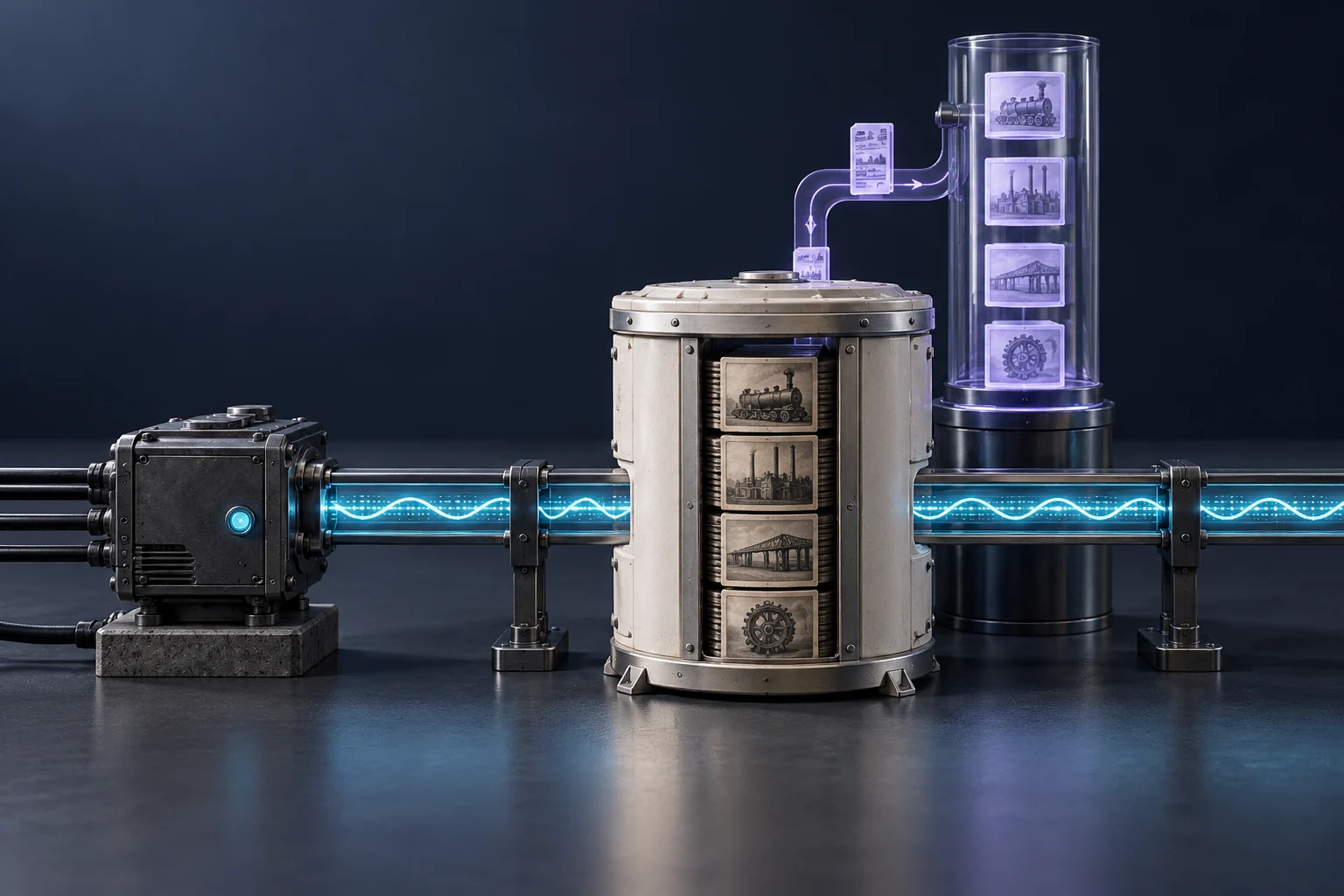
Pilot one source
Choose an approved stream with a known owner. In a separate environment, verify receipt, timestamps and association with the relevant shift or other context. Compare the result with the original historian over an agreed interval. Define the authoritative source for discrepancies beforehand.
Then test an interrupted feed, a late event and a previously received record arriving again. The analytical layer should expose data age and suitability for the selected task. An analytics outage should not silently alter equipment control; verify that property in the project rather than assume it from the architecture name.
Extend after checking the boundaries
A conditional conclusion is to accept the additional layer against a specific question, a preserved source relationship and clear operations. Do not promise savings or no effect on the operational environment without testing your own setup.
Our server core guide helps identify state and owners. The greenhouse controls project confirms networking, server and controller work without claiming InfluxDB adoption. For your infrastructure, discuss the measurement source and analytical task.