News and analysis
After a meeting: give the note an owner and a next step
HubSpot describes context handoffs; Google Meet adds post-meeting actions. Turn a draft into an accountable CRM task.
A useful call summary exists, but several days later nobody knows who promised to send the document. A conversation record matters when it helps work continue. October material from HubSpot and Google Meet addresses different parts of the transition: what information to preserve and where to propose the next action.
Preserve the meaning of an agreement
In its 9 October article, HubSpot describes a structured discovery-call handoff from a BDR to the next sales participant: what the prospect said, what matters to them and where the conversation ended. It is a vendor overview of a note-taking tool, not independent confirmation of every transcript’s accuracy.
Define the essential record for your team. It might include the customer’s request, an unresolved question, the agreed step and its owner. Keep the employee’s assumption distinct. If a customer only asked about timing, a summary should not turn that question into an agreed delivery date.
The next person needs context for action. A complete transcript may remain available for verification, but it does not always make ownership or the actual decision obvious.
A proposed action is not a CRM update
On 12 October, Google announced routines on Meet’s post-meeting screen, including a follow-up draft in Gmail and action items in Google Tasks. Take Notes for Me is required. Rollout began on 5 October and may take more than 15 days; check availability for the actual account.
This is not an announcement of automatic writeback to every CRM. An email can remain a draft, a task can live in another tool, and a deal update requires a separate operation. Read alongside HubSpot’s article, this shows why note storage and ownership of the next step need an agreed relationship.
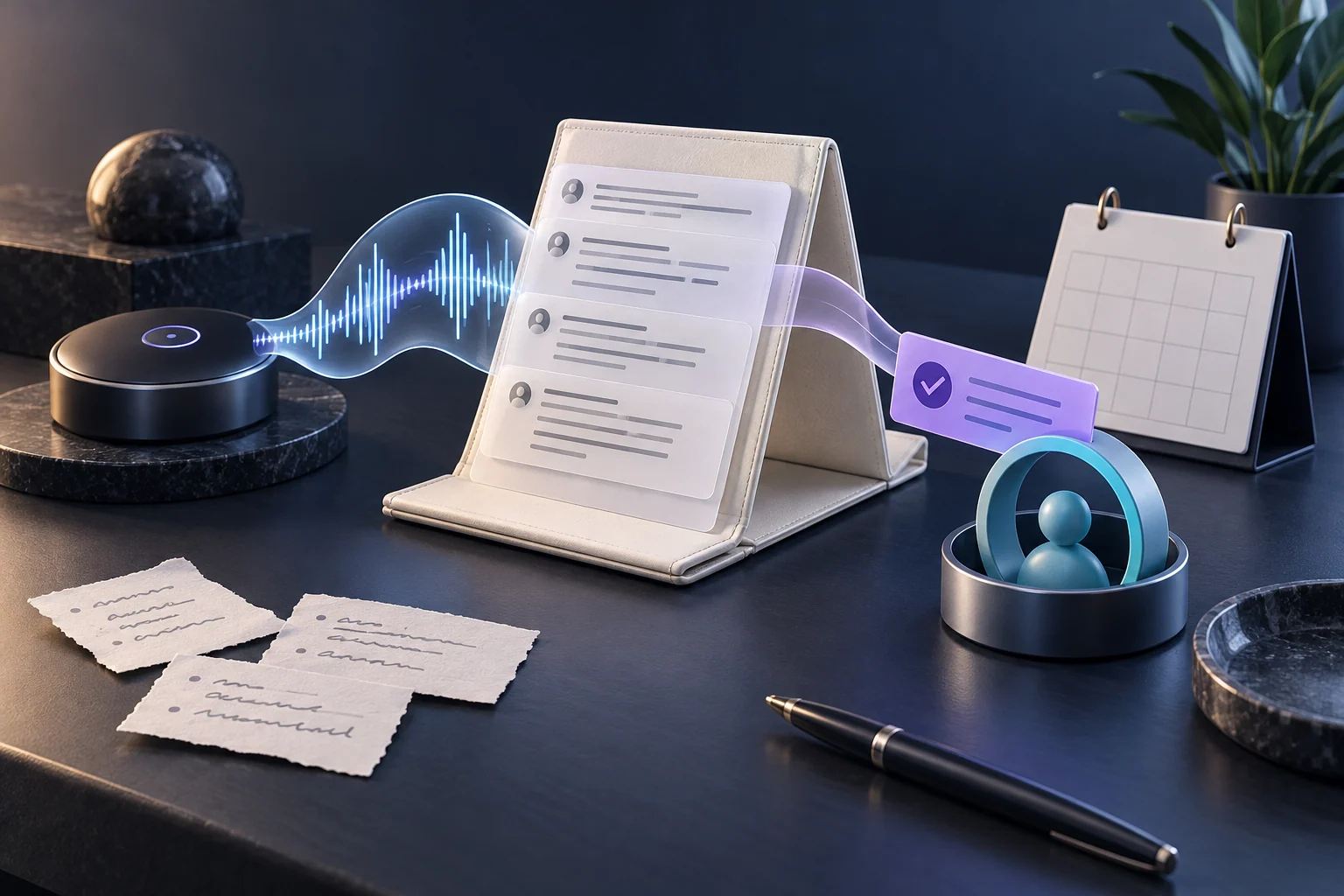
Accept the workflow using one sample call
Create a fictional meeting with one confirmed action and one open question. After processing, check that the summary distinguishes the two. Assign an owner and a deadline only where those details were agreed.
Follow the action into the team’s work list. Check its connection to the right customer, the employee’s access and the correction path as well as task creation. If the record reaches the CRM again, define how repeated delivery behaves and whether it updates the existing task.
The comparison suggests that useful automation closes the gap between conversation and continued work. Acceptance does not need a promise of perfect transcription: the next participant understands the source of the agreement, their action and the unresolved questions.
Our reliable CRM handoff guide covers persistence and retries. The service operations case confirms connections between telephony, CRM and AI call analysis without claiming use of these Meet updates. For your CRM integration, discuss the path from a meeting to its next task.